
Peptides are everywhere.
From skincare and hair restoration to injectables and supplements, they've quickly become one of the most talked-about ingredients in regenerative aesthetics. Their ability to support collagen production, tissue repair, and cellular communication has made them a cornerstone of many modern treatment protocols.
But while the industry is focused on what peptides can do, there's another question providers should be asking:
How are those peptides actually reaching their target?
The truth is, even the most advanced formulations depend on effective delivery. As regenerative medicine continues to evolve, providers are recognizing that pairing innovative biologics with precision delivery technologies may be just as important as the ingredients themselves.
What Are Peptides?
Peptides are short chains of amino acids that function as biological signaling molecules within the body. Rather than replacing damaged tissue, they communicate with surrounding cells, helping regulate collagen synthesis, inflammation, wound healing, and tissue regeneration.¹
In aesthetic medicine, peptide-based formulations are commonly incorporated into professional treatment protocols to support skin rejuvenation, improve overall skin quality, encourage collagen production, and promote healthy hair follicles. Unlike ingredients that simply address visible concerns, peptides work by supporting the body's own regenerative processes.
As regenerative medicine continues to advance, peptides have become one of the industry's fastest-growing categories—not because they're a trend, but because of the science behind how they communicate with cells.
The Skin Barrier Is Designed to Keep Things Out
One of the biggest challenges in topical skincare isn't the formulation, it's the skin itself.
The outermost layer of the skin, known as the stratum corneum, acts as the body's primary protective barrier. While this barrier is essential for preventing water loss and protecting against environmental threats, it also significantly limits the penetration of many biologically active molecules, including proteins and peptides.²³
Simply applying a peptide-based product to the skin doesn't necessarily mean those ingredients will reach the layers where they're intended to work. Because of this, researchers have increasingly focused on delivery technologies that can temporarily enhance the penetration of topical formulations without compromising the skin's long-term barrier function.²
For providers, this shifts the conversation from what you're applying to how you're delivering it.
Why Professional Delivery Matters
Professional treatment technologies are designed to do more than apply advanced ingredients. They help create an environment where those ingredients can perform more effectively.
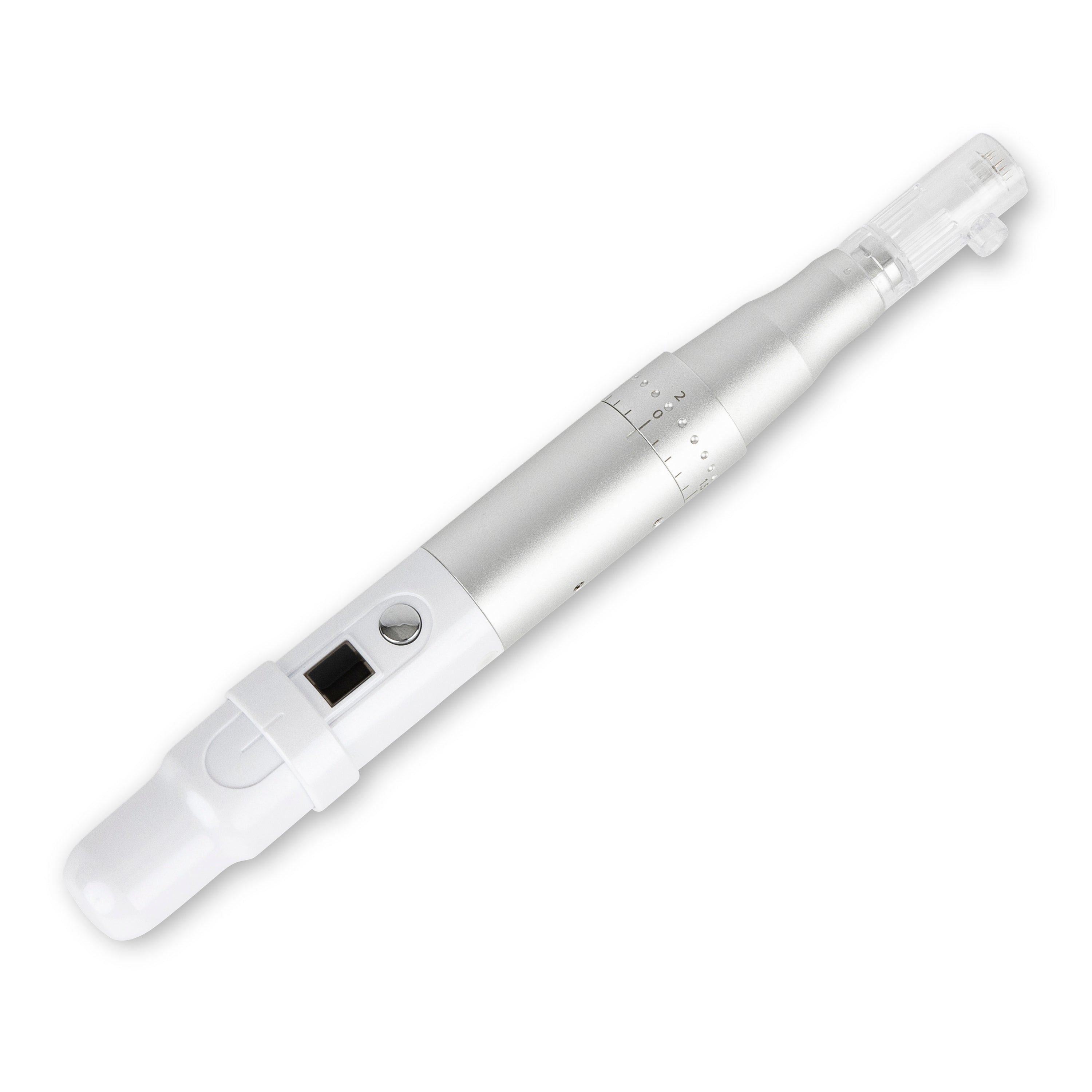
Microneedling creates thousands of precise, controlled microchannels within the skin. These temporary pathways increase skin permeability while simultaneously initiating the body's natural wound-healing cascade, stimulating collagen remodeling and tissue regeneration.⁴
For providers, this creates an opportunity to pair regenerative formulations with precision delivery technologies as part of a comprehensive treatment protocol.
The same principle extends to hair restoration. Controlled scalp treatments help create an environment where professional topical formulations can be incorporated into evidence-based regenerative protocols designed to support healthier-looking hair.
Rather than viewing biologics and devices as separate treatment options, today's providers are increasingly combining both to build more comprehensive regenerative protocols.
Combining Delivery with Regenerative Science
As regenerative aesthetics continues to evolve, treatment protocols are becoming increasingly focused on combining biologically active formulations with advanced delivery technologies.
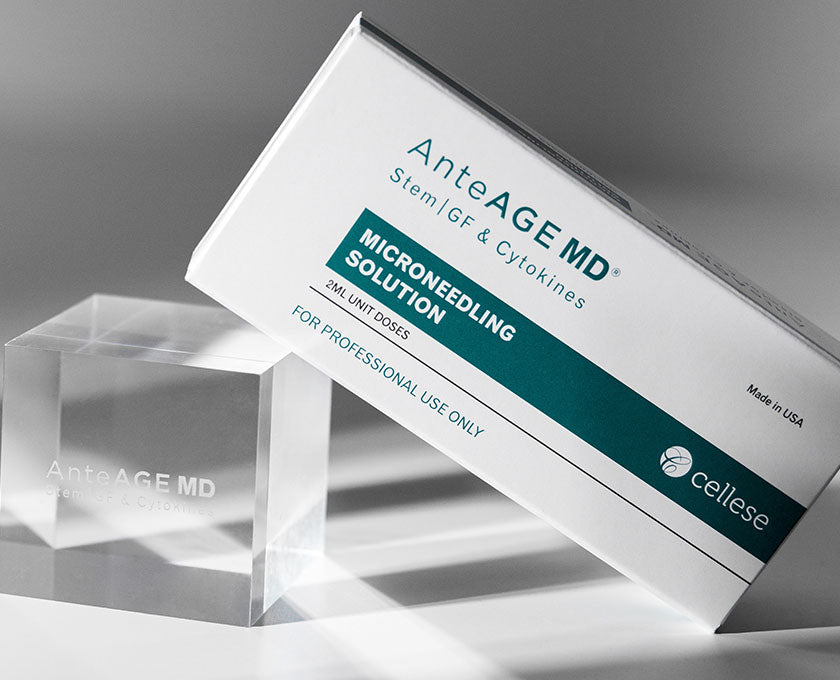
Professional peptide formulations, such as AnteAGE®, are designed with regenerative ingredients including peptides and other signaling molecules that support the body's natural repair processes.
When paired with precision delivery systems like JuvPen for facial rejuvenation and KeraJuv for scalp treatments, providers can create protocols that combine advanced formulations with controlled delivery.
Instead of relying on a single product, successful regenerative treatments are increasingly built around complementary technologies working together.
For Skin Rejuvenation
-
JuvPen Precision Microneedling
-
Professional peptide formulations, such as AnteAGE®
-
Customized treatment protocols
For Hair Restoration
-
KeraJuv scalp treatments
-
Professional peptide-based hair formulations
-
Consistent treatment scheduling and follow-up
As research into peptide delivery continues to expand, it's becoming increasingly clear that the future of regenerative medicine isn't built around one technology—it's built around thoughtful treatment protocols.
Looking Ahead
As regenerative medicine continues to evolve, conversations are moving beyond ingredients alone.
Today's providers are asking better questions.
-
Which ingredients have the strongest scientific foundation?
-
How can those ingredients be delivered more effectively?
-
Which technologies work best together?
Peptides have become one of the defining innovations in regenerative aesthetics—but they're only one part of the equation.
As the science continues to advance, successful treatment protocols will increasingly combine biologically active formulations with precision delivery technologies to maximize their potential.
References
1. Liu, T., Chen, M., Fu, J., Sun, Y., Lu, C., Quan, G., Pan, X., & Wu, C. (2021). Recent advances in microneedles-mediated transdermal delivery of protein and peptide drugs. Acta Pharmaceutica Sinica B, 11(8), 2326–2343.
2. Nguyen, H. X., Bozorg, B. D., Kim, Y., et al. (2023). Microneedle-mediated transdermal delivery of biopharmaceuticals. Pharmaceutics, 15(1), 277.
3. Bhavsar, J., et al. (2024). Strategies for transportation of peptides across the skin: Current advances and future perspectives. International Journal of Biological Macromolecules.
4. Jaiswal, S., & Jawade, S. (2024). Microneedling in dermatology: A comprehensive review of applications, techniques, and outcomes. Cureus.
5. Chaves, C. R. P., et al. (2015). Comparative, randomized, double-blind study of microneedling associated with drug delivery for rejuvenating the skin of the anterior thorax region. Surgical & Cosmetic Dermatology.