
One of the most common questions patients ask before microneedling is simple: Does it hurt?
The answer depends on more than just needle depth. While many people assume discomfort is determined solely by how deep the needles penetrate the skin, several factors influence how a treatment feels, including device design, cartridge quality, provider technique, and the use of topical anesthetics.
As microneedling technology continues to evolve, patient comfort has become an increasingly important consideration for both providers and manufacturers.
Device Design Plays a Major Role
Not all microneedling devices are engineered the same way. Factors such as motor consistency, needle insertion speed, and cartridge construction can significantly impact the treatment experience.
When a device operates smoothly and consistently, needles are able to enter and exit the skin with greater precision. This can help minimize unnecessary tissue trauma and create a more comfortable treatment overall.
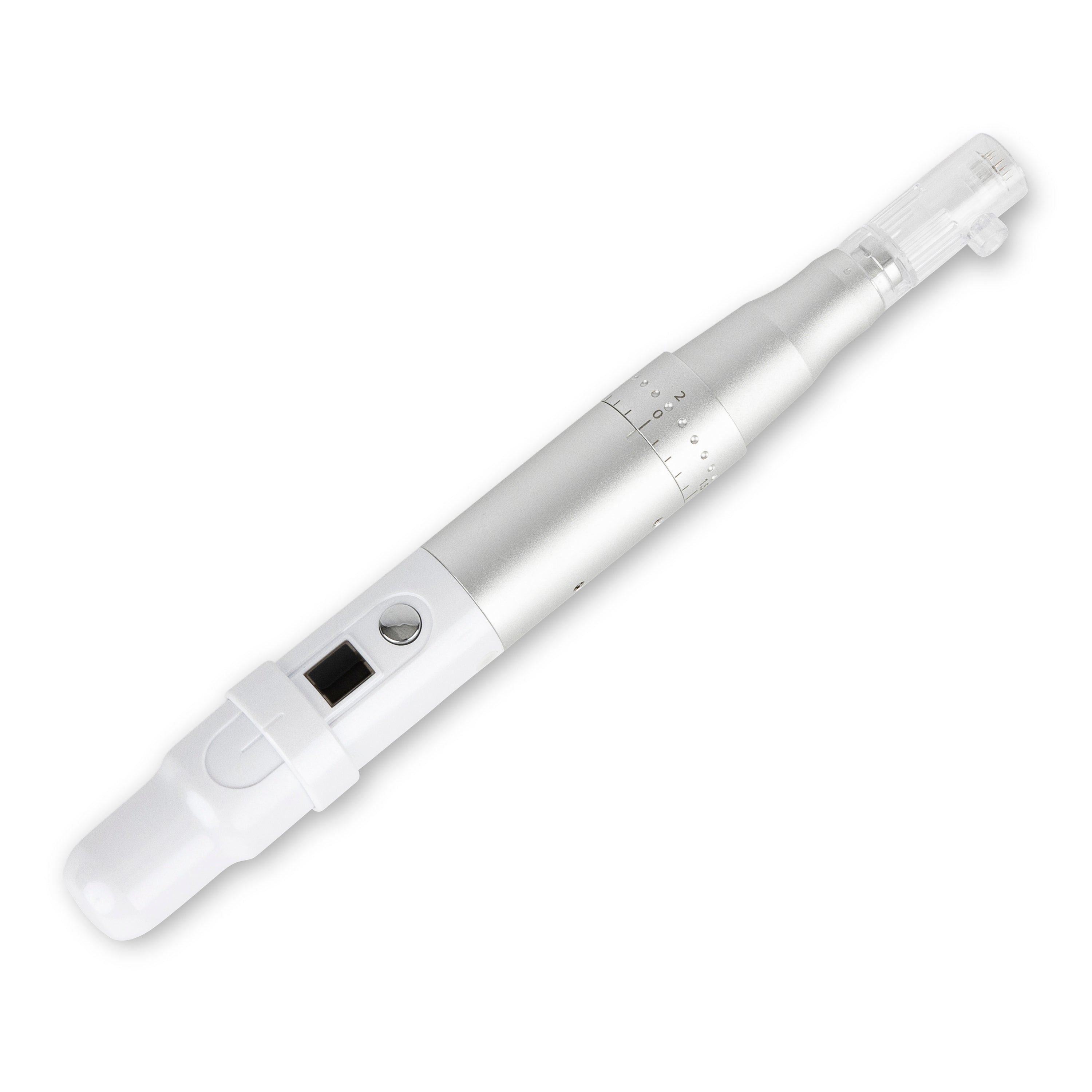
Many newer-generation devices, including JuvPen, are designed with this principle in mind. By focusing on consistency and control, modern systems can help providers deliver effective treatments while supporting patient comfort.

Needle Quality and Technique Matter
The quality of the cartridge itself can also influence how a treatment feels. Sharp, precision-manufactured needles create cleaner microchannels and typically move through the skin with less resistance than lower-quality alternatives.
Provider technique is equally important. Treatment depth, pressure, speed, and the area being treated can all affect patient comfort. Certain areas, such as the forehead and upper lip, tend to be more sensitive, while deeper treatments for acne scars or hair restoration may naturally produce more discomfort.
The Role of Numbing Cream
For many years, numbing cream was considered a standard part of nearly every microneedling treatment. While some patients tolerate modern microneedling procedures well without topical anesthesia, there are still many situations where numbing can improve the overall experience.
Patients undergoing deeper treatments, treating larger areas, or feeling anxious about discomfort may benefit from the use of a topical anesthetic. Products such as Zensa Numbing Cream provide providers with a simple way to customize the treatment experience based on each patient's needs.
Comfort and Results Can Coexist
A common misconception in aesthetics is that a treatment must be uncomfortable to be effective. In reality, patient comfort and clinical outcomes are not mutually exclusive.
As device technology continues to advance, providers have more tools than ever to improve the treatment experience without compromising results. By combining quality devices, proper technique, and comfort-focused strategies when appropriate, practitioners can create treatments that patients are more likely to complete, repeat, and recommend.
Ultimately, the best microneedling treatment isn't defined by how much it hurts—it's defined by the results achieved and the patient experience along the way.
Sources:
Alster TS, Graham PM. Microneedling: A Review and Practical Guide. Dermatologic Surgery. 2018;44(3):397-404.
Hou A, Cohen B, Haimovic A, Elbuluk N. Microneedling: A Comprehensive Review. Dermatologic Surgery. 2017;43(3):321-339.
Singh A, Yadav S. Microneedling: Advances and Widening Horizons. Indian Dermatology Online Journal. 2016;7(4):244-254.
Aust MC, Fernandes D, Kolokythas P, Kaplan HM, Vogt PM. Percutaneous Collagen Induction Therapy: An Alternative Treatment for Scars, Wrinkles, and Skin Laxity. Plastic and Reconstructive Surgery. 2008;121(4):1421-1429.
Read more
Regenerative aesthetics has reshaped how providers approach both skin and hair concerns. By working with the body—stimulating collagen production, improving tissue quality, and supporting natural r...
Peptides are everywhere. From skincare and hair restoration to injectables and supplements, they've quickly become one of the most talked-about ingredients in regenerative aesthetics. Their ability...